
When Smart Bidding “Stops Working” in SaaS (It’s Usually Not Google)
If your Google Ads Smart Bidding performance drifts over time, the culprit is rarely the algorithm. In one recent SaaS-style audit, the patterns pointed to inputs, not AI.
Introduction
A common moment for SaaS founders running Google Ads looks like this:
Month 1 to 2 feels great. You finally see stable conversion volume. Cost per trial looks “fine.” You increase budgets, switch more campaigns to Smart Bidding, and stop micromanaging.
Then, slowly, performance slides.
Not an obvious crash. More like a creeping feeling that you are paying more for the same quality of signups.
In a recent anonymized audit for a growth focused advertiser (typical of a SaaS demand gen motion), the main finding was the exact topic many teams argue about internally:
- “Smart Bidding got worse over time.”
- “Google’s algorithm is broken.”
- “Maybe Performance Max is cannibalizing.”
The audit’s conclusion was simpler and more actionable.
Smart Bidding rarely gets worse on its own. The inputs feeding it usually get noisier.
The symptom pattern founders notice first
SaaS founders usually do not describe this as “bidding instability.” They describe it as a business problem.
You might hear it as:
- “We are getting more low intent trials.”
- “Sales says leads got weaker.”
- “We have to spend more to hit the same pipeline number.”
- “It worked last quarter. We did not change much.”
Under the hood, the Google Ads account often still looks healthy at a glance. Conversions are still coming in. Automated bidding is still learning. The UI does not scream “broken.”
This is exactly why the problem persists.
Why this usually is not “the algorithm”
Smart Bidding optimizes to what you tell it is valuable.
Over time, in SaaS accounts, one of three things tends to happen:
- The conversion signal becomes less representative of revenue.
- The campaign structure drifts away from clean, learnable segments.
- The business changes, but the measurement and bidding goals do not.
When any of those happen, Smart Bidding can look like it is deteriorating, when in reality it is doing a good job optimizing toward a messy target.
A useful mental model for founders is:
- Smart Bidding is a prediction engine.
- Your conversion tracking is the training data.
- Your account structure is the labeling and grouping system.
If your training data degrades, predictions degrade.
How we diagnose “Smart Bidding got worse” in an audit
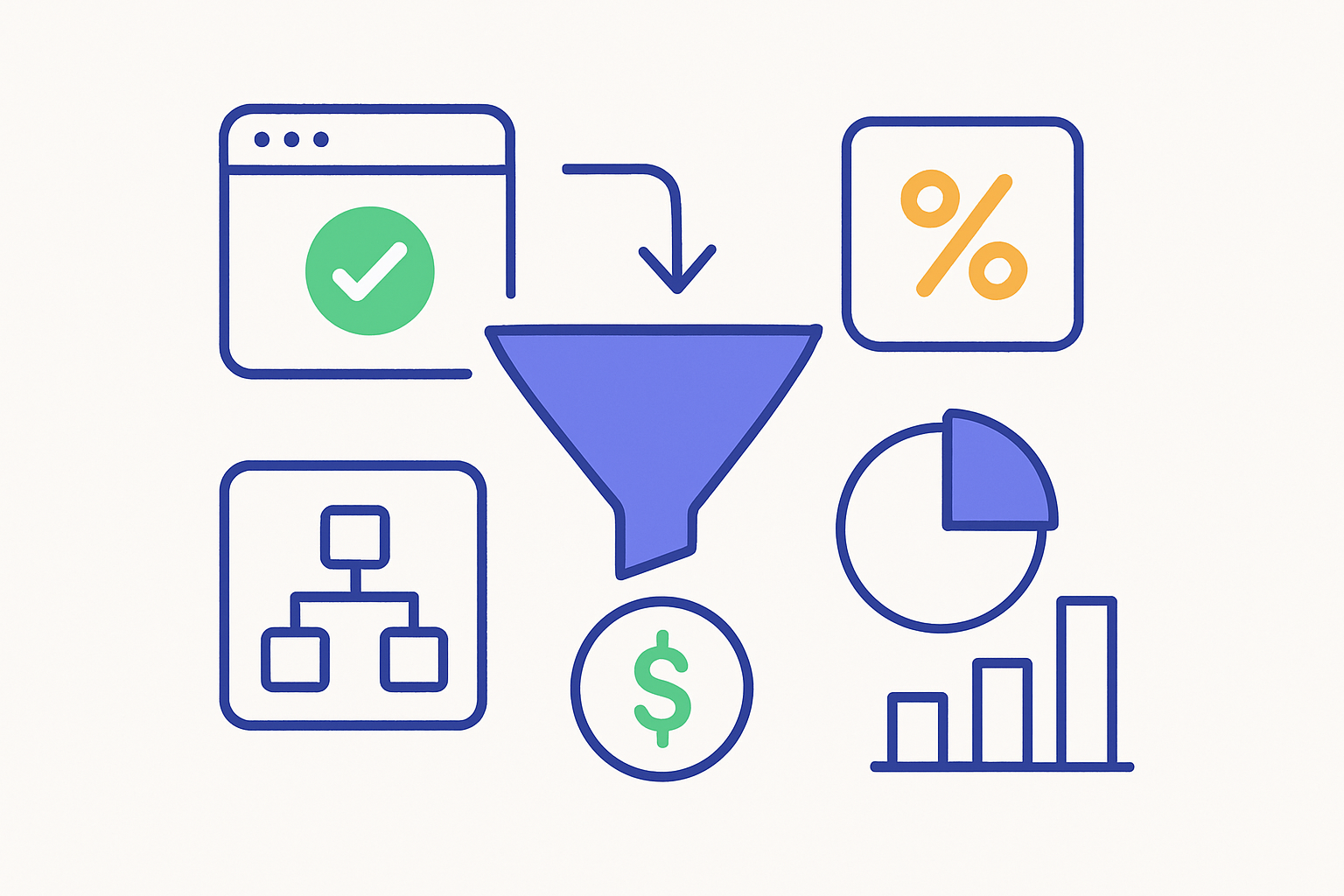
When this shows up in an audit, we avoid the trap of debating which bidding strategy is “best.” Instead we follow a repeatable diagnostic process.
Here is the order we use because it isolates the real root cause faster:
1. Confirm what the account is optimizing for
- Which conversions are marked Primary?
- Are there multiple conversion actions counted per user?
- Is the campaign optimizing to “trial started,” “lead,” “signup,” or something else?
2. Check whether the conversion signal drifted over time
- Did the website add steps that changed conversion rate?
- Did the team add micro conversions (button clicks, page views) as Primary?
- Did the CRM integration change how offline conversions are uploaded?
3. Look for segmentation and intent mixing
- Are brand and non brand in the same campaign?
- Are competitor and category terms mixed?
- Are high intent search terms pooled with broad research terms?
4. Review negatives, match types, and query hygiene
- Not to “go back to 2018,” but to ensure the system is learning from relevant auctions.
5. Evaluate budget and learning stability
- Frequent budget changes, short experiments, and goal flips can create “false drift.”
This approach is boring. It is also effective.
Root causes we see most often in SaaS accounts
This audit flagged the theme: Smart Bidding gets worse over time, and it is rarely the algorithm.
In SaaS, that theme typically maps to a handful of root causes. Here are the most common ones we see, framed in plain language.
1) The conversion you optimize for stopped matching the business goal
Many SaaS teams start with “free trial started” or “book a demo” as the Primary conversion. That is fine early on.
But as you scale, you often realize:
- Some trials are junk.
- Some demos are students, competitors, or consultants.
- Your real constraint is qualified pipeline, not raw lead volume.
If Smart Bidding is trained on raw volume conversions, it will naturally find cheaper people who convert, even if they never pay.
Key takeaway: If quality drops, assume signal quality dropped first.
2) Multiple conversion actions are being counted as success
A subtle issue: multiple conversion actions can be counted per click or per user.
Common SaaS examples:
- “Trial started” and “Email verified” both set to Primary.
- “Lead form submitted” plus “Calendly scheduled” plus “Chat engaged” all set to Primary.
Smart Bidding does not “understand” your funnel. It sees multiple success labels and will chase the easiest combination.
That can make performance look inflated at first and then “worse” when reality catches up.
3) Intent segments got mixed as the account grew
Scaling often means adding:
- New keyword themes
- Broader match types
- New landing pages
- More geos
If these are pushed into existing campaigns, you dilute learning.
Over time, a campaign that used to represent “high intent demo searches” becomes a grab bag of:
- High intent product terms
- Informational searches
- Competitor queries
- Brand spillover
Smart Bidding is then asked to set one bid strategy across several intent layers. That is where you see drift.
4) Measurement changes happened quietly
In many SaaS companies, the ads manager is not the only person touching tracking.
Product teams change onboarding. Engineering adjusts analytics. Marketing ops modifies CRM fields. Someone updates the cookie consent banner.
Any of these can change:
- Attribution
- Conversion counts
- Conversion lag
- Who gets counted as a conversion
Then Smart Bidding “changes,” but it is simply adapting to new data.
Fixes that improve Smart Bidding without abandoning automation
The goal is not to turn automation off. The goal is to give it cleaner targets and cleaner segments.
Here is the playbook we typically apply.
1) Re define the Primary conversion set
Start by making it unambiguous what “success” is for paid search.
Practical steps:
- Pick one Primary conversion per core funnel stage (often just one total to start).
- Move micro conversions to Secondary (still useful for reporting).
- Ensure “count” settings match reality (often “one” for leads, not “every”).
If you can, map conversions closer to revenue:
- Qualified lead
- Sales accepted lead
- Opportunity created
- Paid conversion
Even partial quality signals can help if implemented consistently.
2) Separate intent so the model can learn cleanly
You do not need dozens of campaigns. You do need clean buckets.
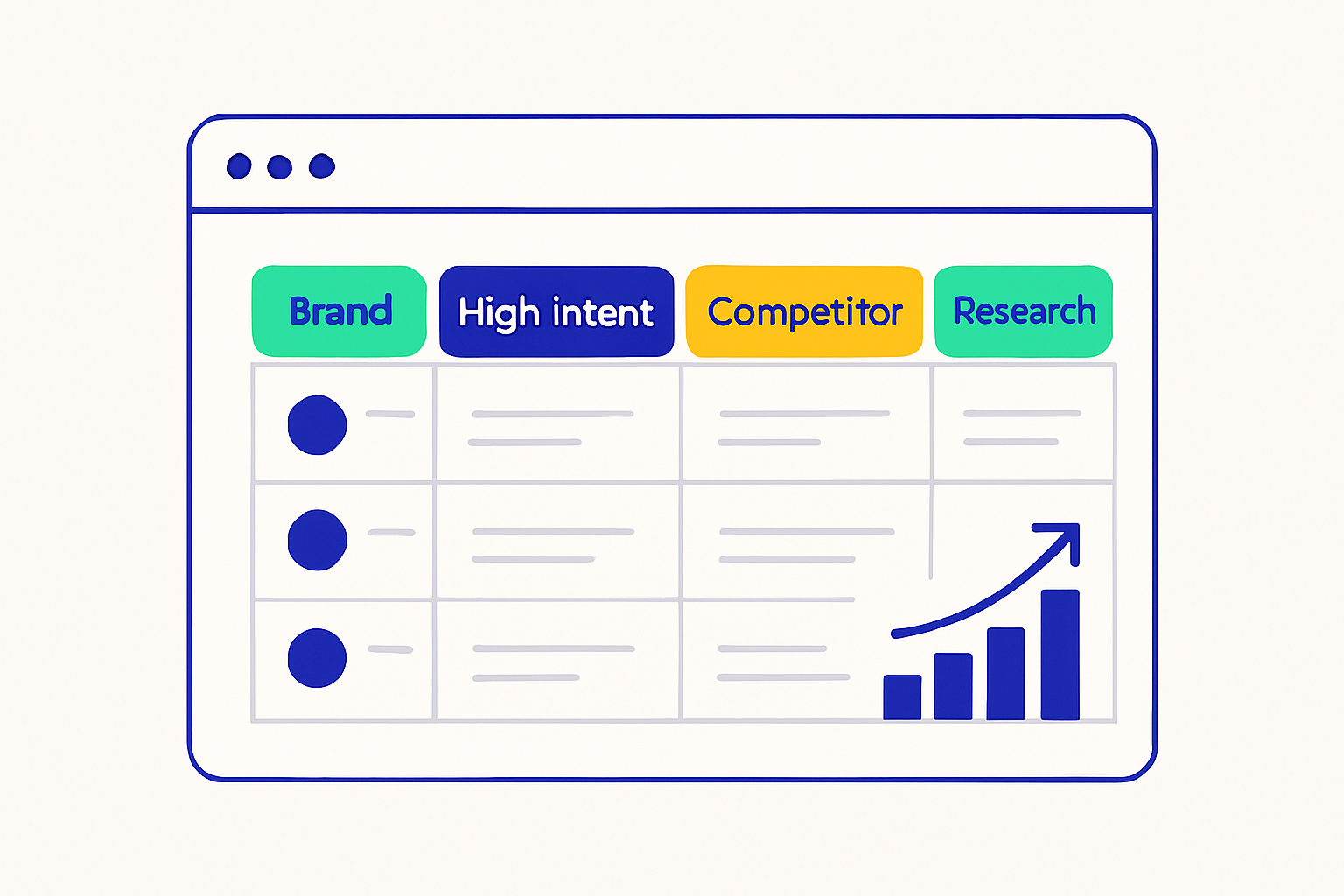
A simple SaaS segmentation that works:
- Brand (protect and measure separately)
- High intent non brand (product and solution terms)
- Competitor (higher CPC, different landing pages and expectations)
- Research or TOFU (only if you can measure downstream impact)
This makes it easier to set realistic targets per segment and prevents “cheap volume” from training your main acquisition engine.
3) Tighten query hygiene without fighting modern match
This is not about rebuilding exact match only accounts.
It is about ensuring the learning set is not polluted.
Tactics:
- Build negative keyword themes for student, jobs, free, templates, definition, examples (as relevant).
- Watch search terms for new product adjacency you do not serve.
- Exclude obvious low intent placements in any cross network setups.
The best time to do this is right after you standardize conversions, because you will see true signal again.
4) Stabilize learning inputs for long enough to judge performance
Smart Bidding needs consistency.
Rules of thumb we use:
- Avoid changing goals and targets weekly.
- Do not stack multiple major changes at once (conversion action change plus landing page change plus new keywords).
- When testing, isolate one variable and give it time.
Founders often want fast feedback. The compromise is controlled changes, not constant changes.
Lessons for SaaS founders who want predictability
If you only remember a few points, make them these:
- Smart Bidding performance drift is often a measurement and segmentation problem disguised as an algorithm problem.
- The most powerful lever is not switching bid strategies. It is choosing the right Primary conversion and keeping it clean.
- Scaling requires intent separation. Otherwise your best campaigns slowly become “average campaigns.”
If you cannot explain in one sentence what your campaign is optimizing for, Smart Bidding cannot either.
A simple checklist you can run this week
If you suspect Smart Bidding is getting worse, run this lightweight audit:
- Open Conversions and list what is Primary vs Secondary.
- Check whether any micro conversions are marked Primary.
- Confirm conversion counting settings (one vs every).
- Review campaign structure: are brand and non brand mixed?
- Pull a recent search term report and add negatives for obvious mismatches.
- Document the last 60 to 90 days of tracking or website changes.
This is not glamorous work, but it is where most “mysterious” performance declines come from.
Closing
In the audit behind this post, the headline was not “Smart Bidding is broken.” It was “Smart Bidding got worse over time, and it is rarely the algorithm.”
That framing matters because it gives you control. You cannot rewrite Google’s bidding model, but you can improve the data and structure you feed it.
If you are seeing drift and want a second set of eyes, you can request an anonymized audit or join the VEOtool beta. No hard sell, just a clear list of what is likely holding performance back and what to fix first.
If you want, request a VEOtool audit or join the beta to see the same diagnostic applied to your account.
Request an audit